An ACL injury can be frustrating because symptoms may improve after the initial swelling settles. Some patients can walk comfortably yet still experience instability during turning, pivoting, jumping, or sudden changes in direction.
This makes treatment decisions particularly important.
People searching for the Best ACL Surgeon in Jaipur should use the consultation to understand both the injury and the reasoning behind the proposed treatment.
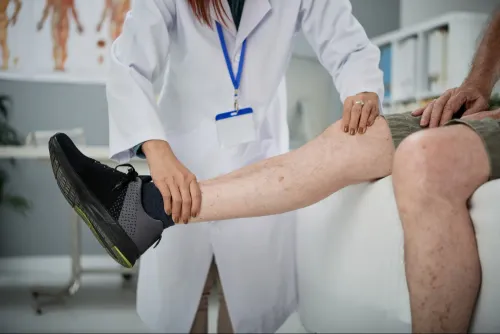
Start by confirming the diagnosis. ACL injuries are assessed through the history of the injury, physical examination, and imaging when indicated. The knee should also be evaluated for associated meniscal, cartilage, or other ligament injuries.
Then ask whether surgery is necessary in your particular situation.
Not every ACL tear follows an identical pathway. Age alone does not determine treatment. The surgeon may consider knee instability, activity level, occupation, sporting goals, associated injuries, and whether structured rehabilitation provides adequate functional stability.
If reconstruction is recommended, several questions are worth discussing:
- Why is reconstruction appropriate for my knee?
- Are other structures also injured?
- What graft options are suitable for me?
- What preparation is needed before surgery?
- When will weight bearing begin?
- How will rehabilitation progress?
- When can work, driving, running, and sport resume?
- What criteria will be used to assess return to sport?
The final question is particularly important.
Return to sport should not depend only on how many months have passed. Functional assessment may consider knee movement, strength, control, stability, confidence, and the demands of the sport.
Preoperative rehabilitation can also be relevant. Depending on the condition of the knee, reducing swelling and restoring movement before reconstruction may form part of the treatment plan.
Dr Ashwini Kumar Khicher assesses ACL and related knee injuries for patients in Jaipur, with treatment decisions based on clinical findings and individual functional requirements.
Patients should also understand that ACL reconstruction is followed by a substantial rehabilitation period. The operation reconstructs the ligament, but successful return to demanding activity requires progressive recovery afterward.
For athletes and active adults across Jaipur and Rajasthan, this means planning beyond the operation itself. Work commitments, physiotherapy, transportation, home support, and the eventual return to training should all be considered.
A productive ACL consultation does more than schedule surgery. It establishes what is injured, whether reconstruction is appropriate, what recovery will require, and how progress will be evaluated before higher-risk activities resume.
Keywords