Ligaments are strong bands of connective tissue that hold bones together and stabilize joints. They play a critical role in allowing smooth movement while preventing excessive motion that could damage the joint. When a ligament is stretched or torn, even simple activities such as walking, climbing stairs, or changing direction can become painful and unstable.
Understanding the basics of Ligament Injury Treatment helps patients recognize symptoms early and seek appropriate orthopedic care before the injury becomes more severe.
What Causes Ligament Injuries?
Ligament injuries commonly occur when a joint is forced beyond its normal range of motion. They are frequently seen during sports, accidents, falls, and sudden twisting movements.
Common causes include:
- Football and cricket injuries
- Running accidents
- Road traffic accidents
- Gym-related injuries
- Sudden changes in direction while playing sports
- Falls on uneven surfaces
- Direct impact to the joint
Although athletes experience ligament injuries more frequently, these injuries can affect people of any age.
Which Ligaments Are Most Frequently Injured?
Several joints in the body depend heavily on ligament support.
The most commonly affected include:
- ACL (Anterior Cruciate Ligament)
- PCL (Posterior Cruciate Ligament)
- MCL (Medial Collateral Ligament)
- LCL (Lateral Collateral Ligament)
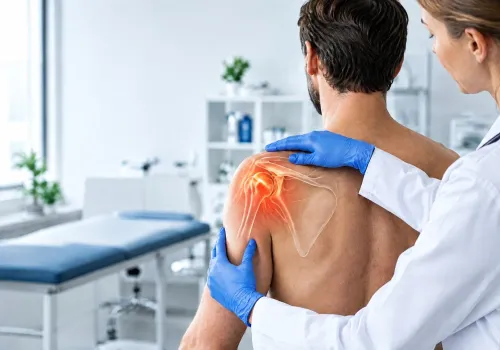
- Shoulder ligaments
- Ankle ligaments
The severity of injury ranges from mild stretching to complete rupture.
Recognizing the Symptoms
The symptoms depend on which ligament has been injured and how severe the damage is.
Patients often report:
- Sudden pain during activity
- Swelling around the joint
- Difficulty bearing weight
- Joint instability
- A popping sensation at the time of injury
- Limited movement
- Bruising around the affected area
Persistent instability after an injury should never be ignored, even if the pain gradually decreases.
How Orthopedic Specialists Diagnose Ligament Injuries
An accurate diagnosis begins with a detailed discussion of how the injury occurred, followed by a physical examination.
Depending on the clinical findings, investigations may include:
- Digital X-rays
- MRI scans
- CT scans in selected cases
- Functional stability tests
Advanced imaging helps determine whether the ligament is partially torn, completely ruptured, or associated with cartilage, bone, or meniscal injuries.
This information guides the treatment plan.
Is Surgery Always Necessary?
No.
Many ligament injuries can be successfully managed without surgery, especially when diagnosed early.
Non-surgical treatment may include:
- Rest and activity modification
- Ice therapy
- Compression
- Elevation
- Physiotherapy
- Strengthening exercises
- Functional braces
Patients with minor tears often regain excellent function through structured rehabilitation.
However, complete ligament ruptures, repeated instability, or injuries affecting active individuals may require surgical reconstruction.
Importance of Rehabilitation
Rehabilitation is just as important as the treatment itself.
A comprehensive recovery program focuses on:
- Restoring joint mobility
- Improving muscle strength
- Enhancing balance
- Preventing stiffness
- Reducing swelling
- Gradually returning to sports and daily activities
Skipping rehabilitation increases the risk of reinjury and delayed recovery.
Why Early Treatment Makes a Difference
Delaying treatment may lead to ongoing instability that places additional stress on cartilage and surrounding structures.
Untreated ligament injuries can contribute to:
- Recurrent joint giving way
- Meniscus damage
- Cartilage wear
- Early arthritis
- Reduced athletic performance
- Chronic pain
Prompt evaluation allows orthopedic surgeons to recommend the most appropriate treatment before secondary damage develops.
Modern Advances in Ligament Injury Treatment
Orthopedic surgery has advanced considerably over the past decade.
Today, many ligament procedures use minimally invasive arthroscopic techniques that involve small incisions and specialized instruments. These approaches often provide:
- Better visualization of the joint
- Reduced soft tissue damage
- Lower postoperative discomfort
- Faster rehabilitation
- Earlier return to daily activities
Treatment plans are always individualized according to age, occupation, activity level, and long-term functional goals.
Finding Specialized Orthopedic Care in Jaipur
People across Jaipur increasingly seek specialized orthopedic evaluation for sports injuries and ligament damage because early diagnosis often leads to better outcomes.
Experienced orthopedic surgeons carefully assess each patient's condition before recommending conservative management or surgical reconstruction. Practices such as Dr. Ashwini Kumar Khicher provide comprehensive evaluation for ligament injuries, arthroscopic procedures, and rehabilitation planning. Educational information available through arthroalign.com also helps patients understand different treatment options before making informed decisions.
Whether the injury results from competitive sports, recreational activities, or an accidental fall, timely ligament injury treatment can restore stability, reduce pain, and help patients safely return to the activities they enjoy.
Keywords